

The difference between a misdemeanor and a felony in Texas is the severity of the crime and the potential punishment. Misdemeanors typically carry penalties of up to one year in county jail, while felonies can lead to state jail or prison sentences, significant fines, and long-term consequences such as a permanent criminal record.
Understanding the difference matters because a situation that starts as a misdemeanor can sometimes escalate into a felony depending on factors like injuries, prior convictions, or other aggravating circumstances.
When that happens, the legal process changes as well. Misdemeanors are usually charged by a document called information, while felony charges must be approved by a grand jury through an indictment.
Knowing how these charges work — and what happens in the early stages of a case — can make a major difference when someone is facing criminal allegations in Texas.
When Things Happen, People Start Asking One Question
Most people don’t wake up planning to learn the difference between a misdemeanor and a felony.
They learn it because something happened.
A traffic stop that went sideways.
A night out that turned into an arrest.
A car accident where alcohol may have been involved.
Sometimes the situation escalates quickly.
Someone gets taken to jail.
And the next question becomes:
“Who do we call?”
When someone is sitting in jail, or when charges are about to be filed, people are suddenly trying to find a criminal defense attorney they can trust.
Not a billboard.
Not a Google ad.
A real lawyer who understands the courts and can step in quickly.
Because early decisions matter.
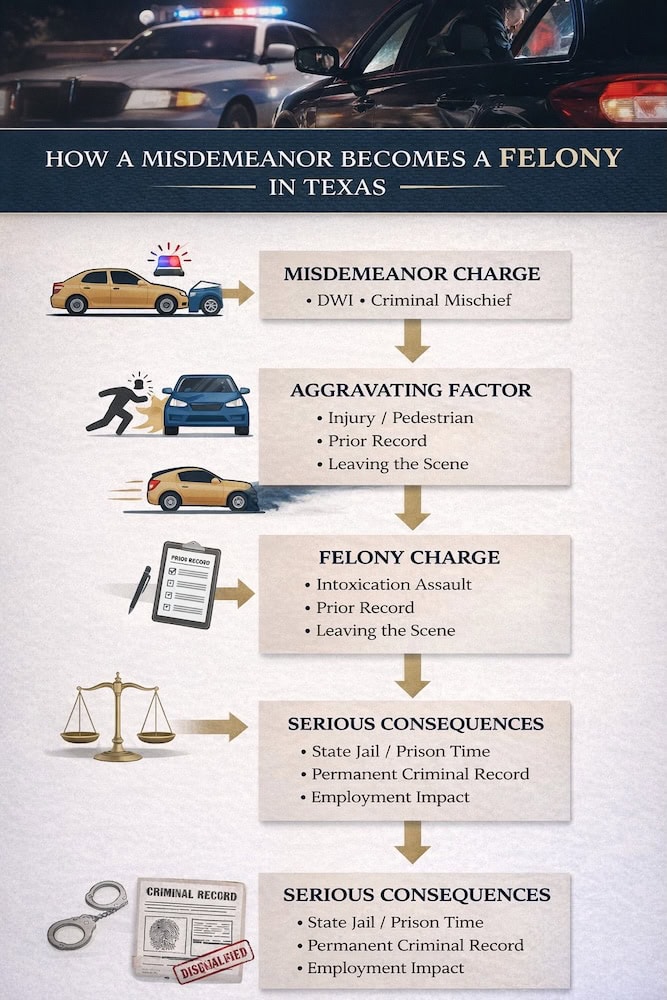
A Misdemeanor Doesn’t Always Stay a Misdemeanor
Many people assume a misdemeanor is “not that serious.”
Sometimes that’s true.
But sometimes it isn’t.
Certain situations can escalate quickly depending on the facts.
For example:
A driver who has been drinking might hit a parked car.
That might initially look like a misdemeanor DWI or property damage case.
But if that same incident involved:
- injuries
- a pedestrian
- prior convictions
- leaving the scene
- or other aggravating factors
the situation can suddenly become a felony case.
The details matter.
What Is a Misdemeanor in Texas?
A misdemeanor is the less serious category of criminal offense, but it can still carry significant penalties.
Possible consequences include:
- Up to 1 year in county jail
- Fines
- Probation
- Community service
Common misdemeanor charges include:
- DWI (first offense in many cases)
- Assault causing bodily injury
- Theft under certain dollar amounts
- Possession of small amounts of drugs
Most misdemeanor cases are filed using what’s called an Information.
What Is an Information?
An Information is the formal charging document used in most misdemeanor cases.
A prosecutor reviews the police report and files the charge directly with the court.
There is no grand jury involved.
Because of that, misdemeanor cases can move quickly once charges are filed.
Felony Charges Are Different
Felonies carry more serious penalties and are prosecuted in district court.
Consequences can include:
- State jail time
- Multi-year prison sentences
- Long-term probation
- Major long-term effects on employment and background checks
Felony charges require a different process before the case can move forward.
What Is an Indictment?
Felony charges in Texas require an indictment.
An indictment comes from a grand jury.
Here is how it works:
- Prosecutors present evidence to the grand jury.
- The jurors review the evidence and determine whether there is probable cause to believe a crime occurred.
- If they agree, they issue what is called a “True Bill.”
- That becomes the formal felony charge.
The First 90 Days Often Shape the Entire Case
The early phase of a criminal case matters more than most people realize.
During the first few months:
- police reports are analyzed
- body cam footage may be reviewed
- witnesses may be contacted
- prosecutors evaluate the strength of the case
Early legal involvement can influence how the case develops.
Why the Difference Matters
The classification of the charge affects much more than jail exposure.
It can affect:
- Employment opportunities
- Professional licenses
- Housing applications
- Immigration consequences
- Background checks
A misdemeanor may allow certain record sealing options later.
A felony can limit those possibilities significantly.
Final Thought
Most people don’t plan for criminal charges.
They respond to them.
A car accident.
A mistake after a night out.
A situation that escalates faster than anyone expected.
Sometimes a case begins as a misdemeanor.
Sometimes it becomes more serious.
The key is not guessing your way through the system.
If you or someone you care about is facing charges in Dallas or anywhere in Texas, talk with a criminal defense attorney who understands how these cases actually unfold.
Call me.
I’ll help you understand what you’re facing, evaluate the risk, and walk into court prepared, protected, and positioned for the strongest defense possible.
Randel Cross
Criminal Defense Attorney – Dallas, Texas
Fierce Litigation. Responsible Negotiation.
I fight hard. I fight smart. And I fight for you.
FAQ
People Also Ask
Photo Credit: Freepik